London’s Stained Glass: A Routemaster & Everyday Life
Christ Church Southwark, a 1950s rebuild, houses a remarkable collection of stained-glass windows that uniquely capture mid-20th century London life, deviating from traditional religious themes. Designed by Frederick Cole and Kenneth Bunton in the late 1950s, these ten nave windows serve as a vibrant historical archive of Southwark, offering a nostalgic glimpse into the area’s past.
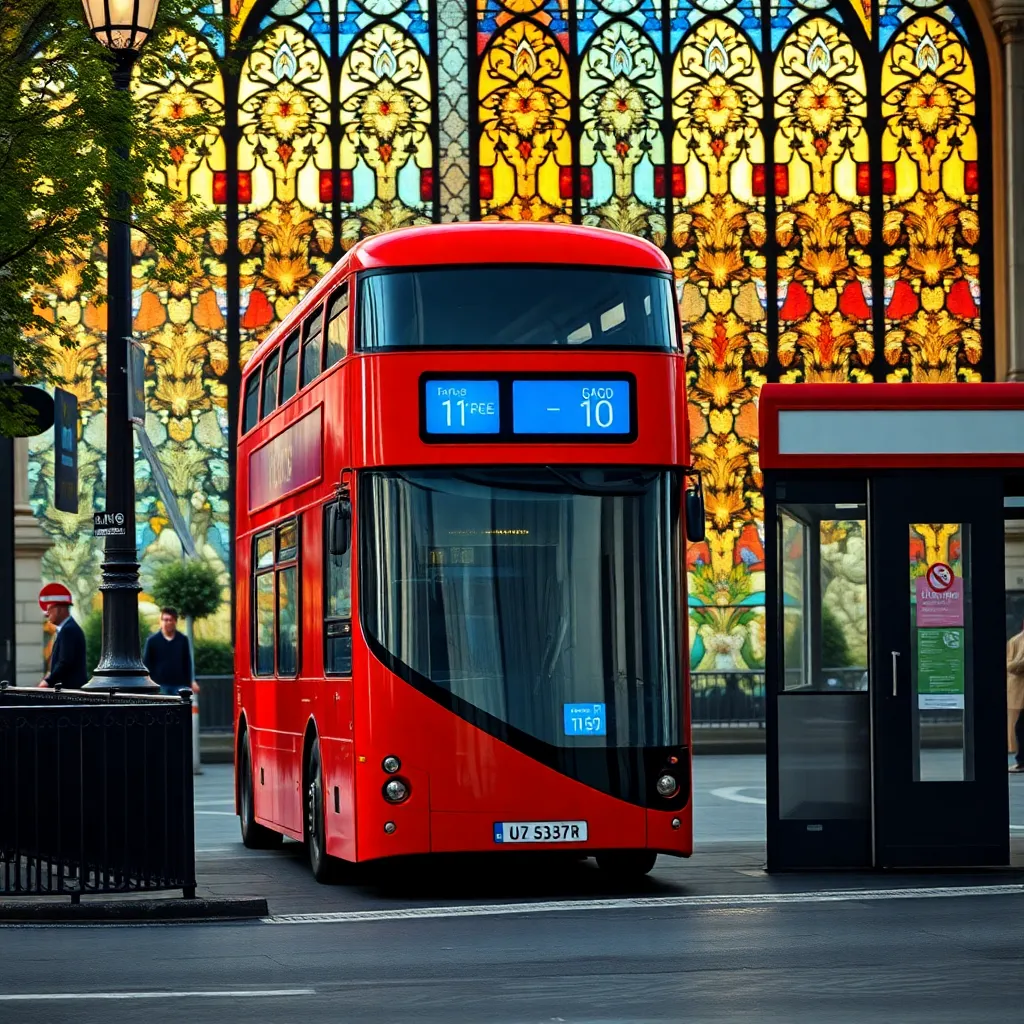
The windows’ distinctiveness lies in their everyday subject matter. One prominent example depicts a classic Routemaster double-decker bus, complete with route numbers (4, 45, 63) and women carrying fish, humorously reflecting local commutes. Another portrays Bankside Power Station (now Tate Modern), alongside St Paul’s dome, the Faraday Building, and an engineer monitoring communications equipment, highlighting Southwark’s industrial and technological landscape. Further panels juxtapose 18th-century life with contemporary (1950s) developments like the Nelson Square housing estate, showcasing the area’s evolution.
Some windows inadvertently document societal shifts; one features a filing cabinet and a secretary taking dictation, an image that, while historically accurate, now highlights outdated office dynamics and gender roles. Beyond the main nave, a second set of smaller windows, installed by John Lawson in 1984, continues the local theme. These include a rare depiction of Sainsbury’s supermarket with shopping trolleys, alongside now-demolished landmarks like Sampson House, and enduring structures such as Sea Containers House and the Kirkaldy Testing Works, known for its “FACTS NOT OPINIONS” pediment.
These stained-glass installations don’t explicitly offer “benefits” in a modern sense but serve as invaluable cultural artifacts, preserving specific moments of urban history and local identity through art. They provide a fascinating, accessible historical record for visitors, reflecting the community’s daily life and architectural changes over decades. The article also notes a poignant memorial in the church grounds: a stone-covered impression of a cross scorched into the ground during a 1941 wartime bombing, further grounding the church in its local history.
(Source: https://londonist.com/london/history/a-double-decker-in-stained-glass)