AI Video Reveals Wren’s Never-Built London in Stunning Detail
A Digital Resurrection of Wren’s Lost City
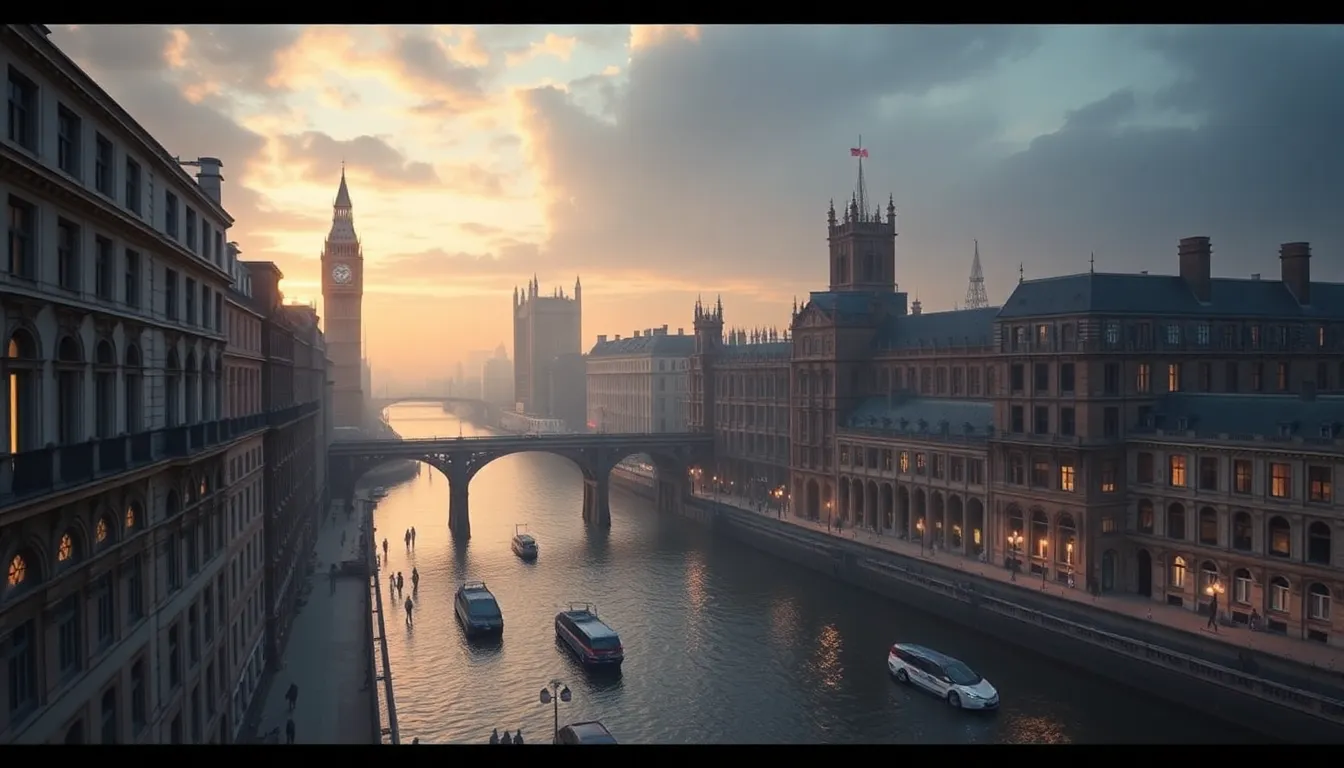
For anyone who’s ever wandered past the Monument or ducked down Fish Street Hill without a second thought, a new AI-generated video is about to change how you see the City of London forever. Local writer and researcher Daniel Coughlin has spent months piecing together historical engravings, old maps and archival photographs to digitally reconstruct Christopher Wren’s audacious — and ultimately rejected — masterplan for rebuilding London after the Great Fire of 1666. This isn’t a dry academic exercise. Coughlin’s photorealistic renderings drop Wren’s grand boulevards and piazzas straight into our modern skyline, complete with red buses trundling past baroque facades and skyscrapers looming behind Continental-style squares. It’s a genuinely startling piece of work, and one that’s already got residents across the Square Mile talking. For those of us who walk these streets daily, often past landmarks like Big Ben or through Whitehall London without pausing to consider their alternate histories, this project is a timely reminder that the city we know is just one version of many that were once possible.
What Wren Wanted for the City of London
Wren’s vision, backed enthusiastically by Charles II, was for a London of ‘pomp and regularity’ — wide avenues radiating from key landmarks, formal piazzas, and a cleaned-up Fleet river reimagined as a grand canal lined with elegant bridges. Coughlin’s video brings several of these unrealised schemes to life: a baroque Royal Exchange framed by a Rome-inspired piazza, a fountained square west of St Bride’s church with sightlines straight to St Paul’s Cathedral, and the Monument standing at the hub of sweeping riverside boulevards rather than tucked away as it is today. Only fragments of Wren’s ambition survived the practical realities of rebuilding — chief among them St Paul’s itself, still one of the city’s most visited landmarks. The rest fell victim to property disputes, funding shortfalls, and a City desperate to reopen for business rather than wait for architectural perfection. It’s a fascinating case study in how civic ambition often collides with pragmatic urgency, something local planning committees today would surely recognise.
Why This Matters for Local Heritage Lovers
So what should residents do with this glimpse of an alternate London? For starters, it’s worth seeking out the real remnants of Wren’s era still standing — the Monument, St Paul’s, and the network of Wren churches scattered across the City. Several local museums, including those focused on London’s architectural history, regularly host exhibitions exploring the Great Fire and its aftermath, and this AI project has already sparked renewed interest ahead of upcoming displays. Keep an eye on listings for any London exhibition tackling Wren, the Great Fire, or historical urban planning — these are must-see for anyone curious about our city’s near-misses. Community history groups are also using Coughlin’s video as a springboard for local walking tours retracing where Wren’s canal and piazzas would have stood. Whether you’re a lifelong Londoner or new to the area, this project is a brilliant entry point into local history, proving that even our most familiar streets hold stories of roads not taken.