London’s Oldest Statues: A Roman Twist and Tudor Tales Uncovered
The Surprising Secret of London’s Oldest Statue
London, a city teeming with stories etched into its very foundations, has recently unveiled a fascinating secret regarding one of its most cherished historical artifacts. What was long believed to be the capital’s oldest outdoor statue has proven to be an even more profound testament to its layered past. The unassuming figure of King Alfred, standing proudly in Southwark’s Trinity Church Square, had been thought to date back to medieval times. However, a remarkable discovery made during restoration work by the Heritage of London Trust in 2021 revealed an unexpected twist. Researchers found that King Alfred’s 18th-century Coade Stone upper body had been skilfully affixed to a much older, genuinely ancient Roman base – specifically, the legs of a goddess, likely Aphrodite. This means that while Alfred’s upper half is relatively ‘modern,’ the statue’s lower regions grant it the unique distinction of being London’s oldest *partial* outdoor statue, bridging millennia. This surprising blend of Roman antiquity and Georgian craftsmanship offers a captivating insight into the continuous evolution of our urban landscape and underscores the hidden wonders that await those who delve into London’s history.
Unearthing London’s Complete Stone Elders
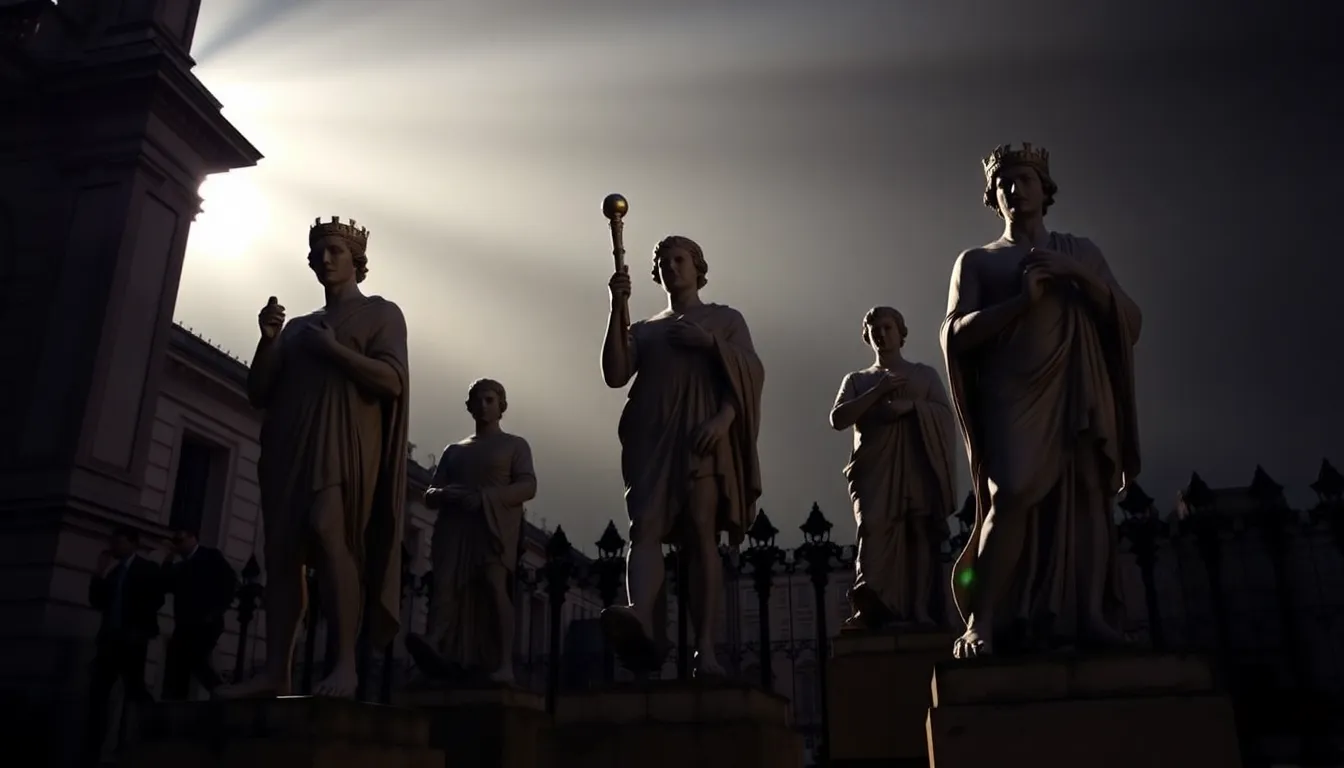
The intriguing revelation about King Alfred naturally leads to a fresh question: if Alfred is only partially ancient, then what is London’s oldest *complete* outdoor statue? The answer, as often happens with deeply historical queries, is delightfully ambiguous, offering several fascinating contenders. Among the strongest candidates are the likenesses of King Lud and his sons, alongside an effigy of Queen Elizabeth I, both residing in the churchyard of St Dunstan-in-the-West on Fleet Street. These regal ornaments, thought to have been created around 1586 for the old Ludgate, provide a tangible link to Tudor London. Another mysterious figure, known simply as the ‘melancholy man,’ in Holland Park, is also believed to be of similar vintage, though his origins and subject remain a captivating puzzle. When charting these historical residents, experts typically exclude statues found within a London museum (with rare exceptions like the Lumley Horseman at the Tower of London due to its unique status), as well as busts and elaborate tomb monuments, focusing instead on freestanding outdoor works that have withstood the test of time. This meticulous approach helps delineate the specific character of what constitutes a ‘statue’ in this historical quest.
Exploring London’s Enduring Legacy
These ancient stone inhabitants do more than just mark historical figures; they serve as enduring touchstones connecting us to London’s vibrant past and its ongoing narrative. For both locals and those who visit London, exploring these remarkable statues offers a unique lens through which to appreciate the city’s rich tapestry. Imagine strolling through Fleet Street and encountering King Lud, a figure whose presence has graced the city for nearly 500 years, or discovering the enigmatic melancholy man in the serene setting of Holland Park. These sites are not just historical markers; they are unique london attractions, offering a free and accessible journey through time. While some special figures, like certain depictions of Elizabeth I within Guildhall, are only viewable on specific open days, many of London’s oldest statues are readily accessible, providing excellent answers to the question of where to go in London for a dose of history and culture. They remind us that our city is a living museum, constantly revealing new layers of its profound history, inviting everyone to discover its stories and connect with the generations that came before us.
Source: What’s London’s Oldest Statue?