Royal Festival Hall: 75 Years of South Bank’s Cultural Heartbeat
From Rubble to Riverbank: A Post-War Vision
The year 2026 marks a significant milestone for London’s iconic South Bank: 75 years since the Royal Festival Hall first opened its doors to the public. While we often marvel at its vibrant programme of London events today, few recall its humble, almost unimaginable beginnings. Seventy-five years ago, construction began on what was then merely an expanse of industrialised marshland, a stark contrast to the cultural hub it is now. Emerging from the shadow of the Second World War, the project was envisioned as a much-needed “tonic” for a war-scarred city – a beacon of hope and a tangible expression of a burning desire to forge a better society. This ambitious undertaking aimed to create a place for collective joy and inspiration, a fresh start. Architects Robert Matthew and Leslie Martin faced the monumental task of transforming this challenging site into a grand concert hall, aiming to create a public space where people could truly connect and experience art, a true “palace for the people” that would forever reshape the city’s cultural landscape and inspire future generations.
Engineering an Icon: Challenges and Controversies
Building a structure of the Royal Festival Hall’s scale on its chosen site presented extraordinary engineering challenges. Not only was the area surrounded by active rail lines, but the marshy ground required extensive drainage and the construction of a new river frontage to support the ambitious design. The architects adopted an ingenious solution: raising the main auditorium as an ‘egg’ within the building’s outer shell. This innovative design, inspired partly by Gothenburg’s concert hall and the Finsbury Health Centre, ensured acoustic isolation with thick concrete layers and intricate internal cladding using elm, sycamore, and birch. Upon its unveiling in 1951, the brutalist structure certainly made a statement – not always a universally positive one. Some, like conductor Sir Thomas Beecham, famously decried it as “repellant” and “monstrous,” reflecting a public reaction that was often “equivocal and disturbed” for years. The sheer audacity of its design sparked debate, marking it as a truly extraordinary building from its very inception.
A Beloved Landmark: The Royal Festival Hall’s Enduring Legacy
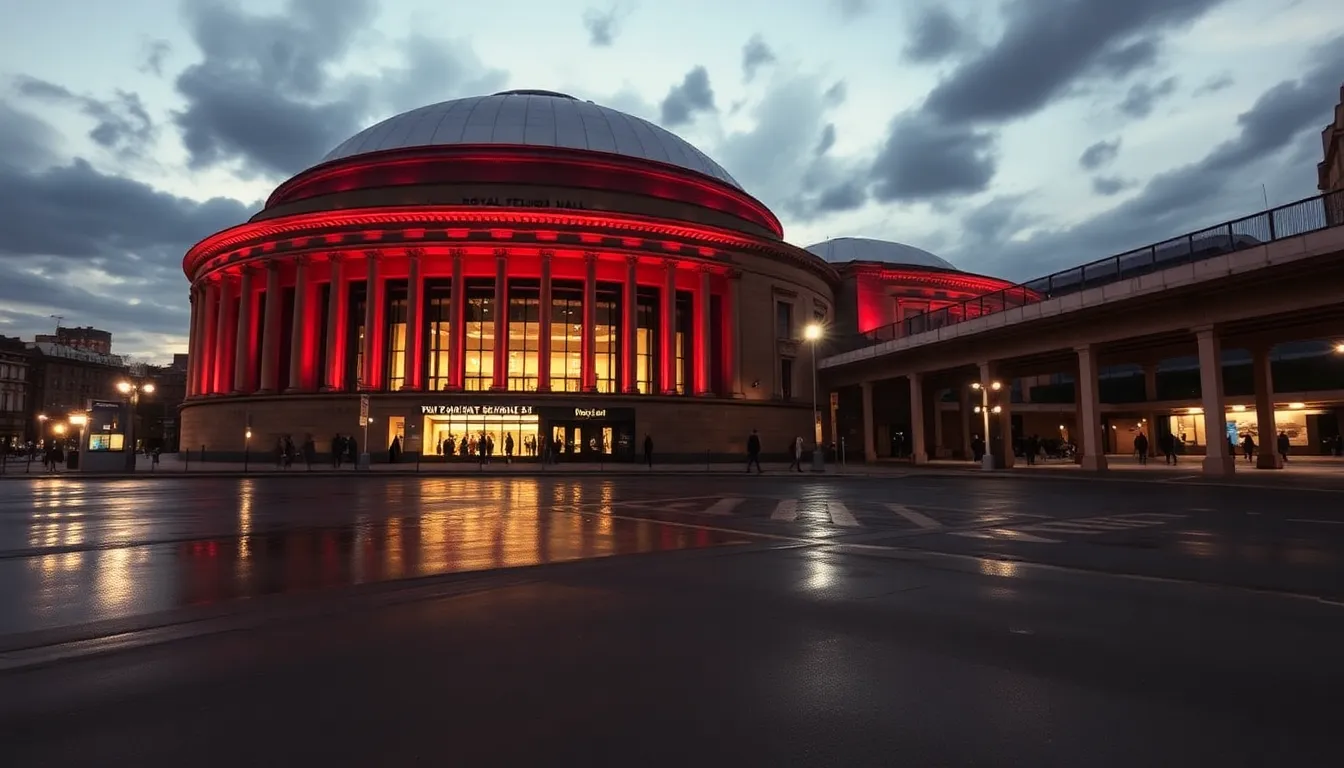
Despite the initial mixed reactions and architectural critiques, time has proven to be a great healer for the Royal Festival Hall. Today, it stands as an undeniable integral cog in the South Bank’s dynamic landscape and a cornerstone of London’s rich cultural tapestry. Far from being a mere concert venue, it has evolved into a welcoming hub, a place of “myth and imagination” that is truly “palatial, but open to all,” reflecting its original post-war ethos. For anyone planning to visit London, the Royal Festival Hall remains one of the premier london attractions, offering a diverse array of London events from music and dance to literature and art in its various spaces. Its foyers continue to be vibrant spaces where people can meet, gather, and engage, embodying the initial vision of a better society and solidifying its status as a must-see destination for where to go in London for arts, community, and inspiration. It continues to brighten the city, just as its original visionaries hoped.
Source: In Pictures: The Royal Festival Hall’s Construction 75 Years Ago