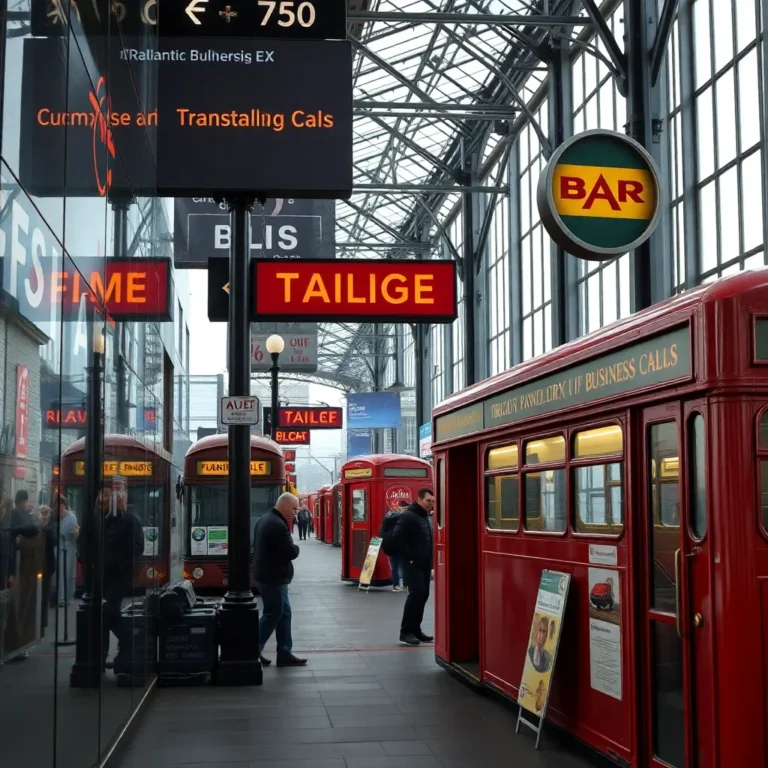

Hidden Art Quest: New App Turns London Underground Into Adventure
A Hidden Artistic Legacy Across Every Station
Since 2013, artist Mark Wallinger’s labyrinths have quietly adorned all 272 London Underground stations, each bearing a unique pattern and individual number from 1 to 272. Created to commemorate the Underground’s 150th anniversary, these geometric artworks have become an unexpected phenomenon among residents and commuters who turn their daily journeys into artistic treasure hunts.
What makes these installations particularly special is their accessibility—they’re there for everyone to discover, yet remain overlooked by most passengers rushing through stations like King’s Cross, Victoria, and countless others across the network. The numbering sequence itself holds intrigue: it follows the Optimal Tube Challenge route, that famously ambitious attempt to visit every station in a single day. When Nine Elms and Battersea Power Station opened in 2023, they were cleverly numbered 110a and 110b to maintain numerical proximity to Kennington, preserving the underlying logic of Wallinger’s original system.
For those who love London’s intersection of art and transport, these labyrinths represent an accessible cultural treasure that connects our citywide community through shared exploration.
Meet the Developer Connecting Collectors Across London
Ryan Dobson, a local enthusiast himself, recognised that labyrinth hunters needed a simple way to track their progress across the sprawling network. He developed Mind the Maze, a free app available on both iPhone and Android, designed specifically for Londoners seeking to collect and document all 272 artworks.
The app transforms what might seem like a solitary pursuit into something more tangible. Users tick off each discovered labyrinth, upload photos, and receive celebratory digital confetti alongside three fascinating facts about that particular station. For those stuck on harder-to-locate designs—some are genuinely well-hidden—the app provides helpful clues to guide the hunt.
Ryan’s innovation has revealed something surprising about our community: there’s a genuine, enthusiastic movement of Londoners using these labyrinths as motivation to explore neighbourhoods and stations they’ve never previously visited. People are venturing to lesser-known corners of the network, discovering parts of their own city they’d otherwise overlook. The app’s map feature shows all discovered stations alongside unclaimed ones, creating a visual incentive to continue exploring. For residents wanting to deepen their connection to London’s underground geography and celebrate local public art, Mind the Maze transforms ordinary commutes into meaningful urban exploration.
What Local Residents Should Know and How to Get Started
If you live in or regularly travel through London, Mind the Maze offers an engaging way to experience your city with fresh eyes. Whether you’re familiar with landmarks like Whitehall London or the iconic Big Ben area, or prefer discovering quieter local stations, the labyrinths provide a creative lens for urban exploration.
The app is entirely free to download, making it accessible to everyone from casual commuters to dedicated collectors. You can start whenever suits you—there’s no pressure to rush through all 272. Many participants discover labyrinths ad hoc during their regular journeys, gradually building their collection over months. Others approach it systematically, planning routes to maximise discoveries.
For families, this represents an excellent way to teach children about London’s transport network and public art. For long-time residents, it might reveal hidden details you’ve walked past countless times. Community groups and local organisations could even organise guided labyrinth hunts, combining social activity with cultural appreciation.
Download Mind the Maze today and join fellow Londoners in celebrating Wallinger’s contribution to our Underground heritage. Share your discoveries, explore unfamiliar stations, and reconnect with the artistry woven into London’s most essential transport network. Happy hunting—you’ve got 272 reasons to explore deeper.