When 13 Jazz Monkeys Escaped Across West London in 1926
A Heist Gone Hilariously Wrong on Latimer Road
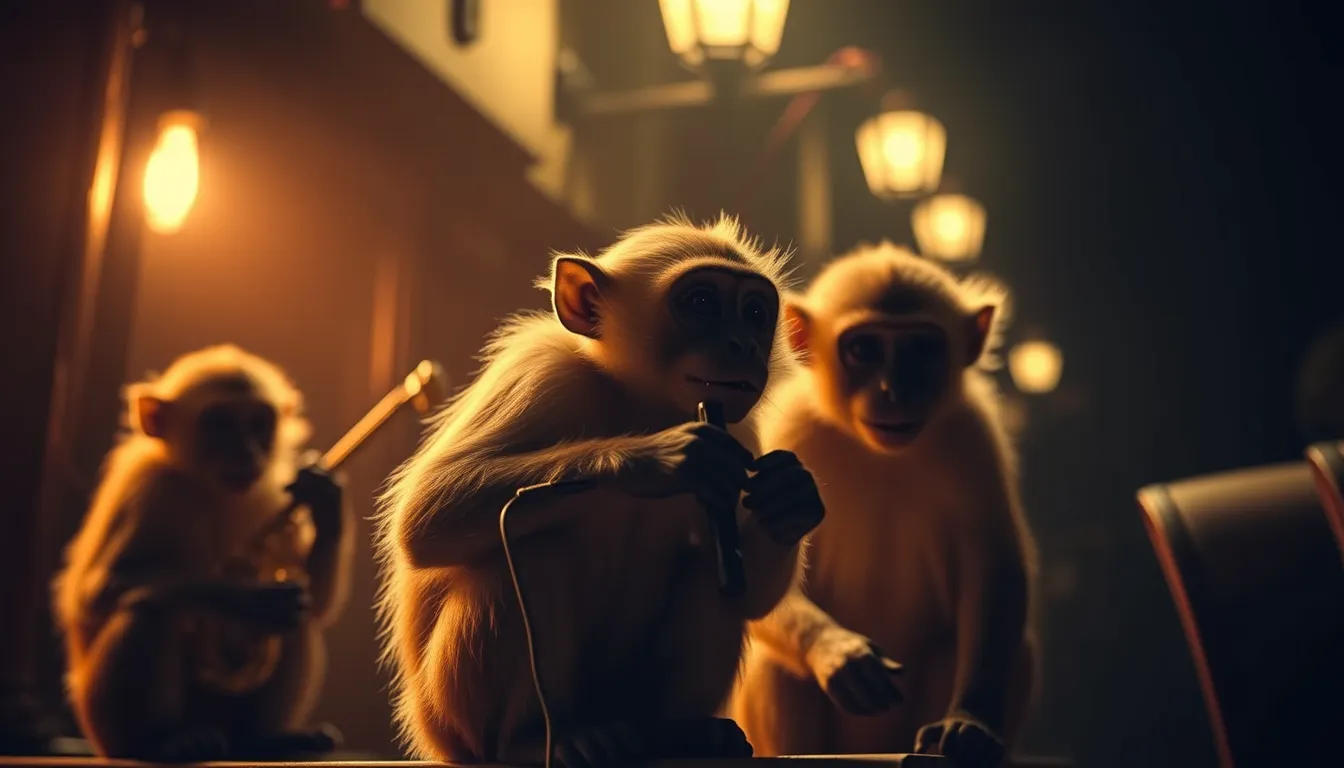
On Friday, 19 November 1926, what should have been an ordinary theft transformed into one of West London’s most bizarre episodes. Burglars broke into the premises of Mr T Murphy, an amusement caterer based on Latimer Road in Notting Hill, expecting to find valuables or perhaps a few chickens in the coop they spotted. Instead, they unleashed utter chaos—13 performing monkeys, each a trained musician set to perform at the World’s Fair scheduled for the Agricultural Hall on Christmas Eve, poured out onto the streets of our neighbourhood.
The thieves immediately fled, as did their unexpected furry discovery. Within hours, these four-legged performers had claimed Latimer Road station as their headquarters, establishing themselves beneath the railway arches and platforms. What followed was a week of unbridled mayhem that would grip the entire community and test the patience of residents, police, and shopkeepers alike. The monkeys weren’t simply loose animals—they were talented instrumentalists with personalities, names, and reputations that local newspapers would chronicle in vivid, alarming detail.
Tales of Theft, Mischief, and Terror in Our Streets
The escaped musicians made themselves infamous across Notting Hill and beyond. Snookums, the cymbalist, developed a taste for cigarettes and launched raids on local tobacconists. Jennie, the drummer, discovered a weakness for sweets, demolishing an entire pound of peppermint creams at a neighbourhood shop before her capture by an old soldier who’d served in Singapore and understood primate behaviour.
But the incidents weren’t all lighthearted. Residents reported genuine alarm as monkeys invaded homes, terrified elderly women, and yanked roof tiles with destructive intent. One particularly brazen performer climbed through an open window into Mrs Harris’s bedroom on Mersey Street while she held her baby—nearly frightening her to death. Another acquired a pipe and puffed it defiantly at would-be captors. A third slid down multiple chimneys like an early Christmas intruder, leaving one woman so startled she fainted into her tea tray, and another to permanently nail her window shut after a decade of sleeping with it open. Residents filed steady reports to police; Mr Murphy accumulated mounting bills for stolen goods and broken property.
The Hunt Continues—What West London Learned
By the second day, coordinated capture efforts involved station staff, local police, angry shopkeepers, and appointed bounty hunters—roughly 20 people searching across Notting Hill’s rooftops and streets. Seven monkeys were eventually recaptured and returned to their cages through a combination of trapping and luring. Two more, including the troublemaking Issacs, were caught the following day.
But four remained at large: Bimbo the drummer, Snookums the cigarette thief, Sandy, and Franko—the band’s leader and most valuable performer, worth over £100 with West End cabaret ambitions. Mr Murphy posted a substantial £25 reward for their safe return, as the Christmas Eve performance at the Agricultural Hall depended on Franko’s participation. This incident reminds us how our neighbourhood’s history is filled with unexpected moments that brought communities together—whether in frustration, humour, or shared purpose. Today, when visiting london attractions like Big Ben or London museums examining Victorian life, few realise that our own Notting Hill streets once hosted such chaotic drama, a testament to the rich and unpredictable character of West London that persists a century later.
Source: When A 13-Piece Monkey Jazz Band Escaped, Running Riot Across West London